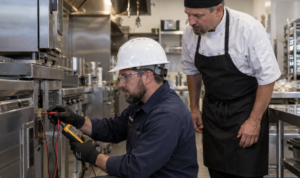
Oklahoma’s restaurant industry depends on more than good food, reliable employees, and loyal customers. Behind every grill, refrigerator, freezer, ventilation system, dishwasher, warming station, and point-of-sale terminal is an electrical system that has to perform safely day after day. In a busy commercial kitchen, electrical equipment is exposed to heat, moisture, grease, repeated cleaning, vibration, and long operating hours. Those conditions can gradually weaken insulation and create problems that may not be visible during an ordinary inspection.
For restaurant owners in Woodward and throughout northwest Oklahoma, electrical reliability has a direct connection to business continuity. A sudden electrical failure can shut down refrigeration, interrupt food preparation, damage expensive equipment, create a fire hazard, or force a restaurant to close until repairs are completed.
That makes preventive electrical testing an important part of a broader safety strategy. Organizations such as the Oklahoma Restaurant Association provide restaurant operators with industry resources, education, certifications, and information designed to strengthen Oklahoma’s foodservice and hospitality businesses. Electrical testing deserves a place in that same conversation about operating responsibly and protecting the people, equipment, and facilities that keep restaurants running.
Restaurant Safety Goes Far Beyond Food Handling
Food safety naturally receives enormous attention in the restaurant industry. Proper refrigeration, cooking temperatures, sanitation, employee hygiene, and contamination prevention are fundamental parts of restaurant management.
The Oklahoma State Department of Health oversees important food establishment licensing and regulatory requirements, while the state also provides an online system for reviewing Oklahoma food service establishment inspections.
Those protections are essential, but a restaurant’s overall safety picture is much broader.
Commercial kitchens use powerful electrical equipment throughout the day. Refrigerators and freezers must maintain consistent temperatures. Exhaust and ventilation systems must operate reliably. Dishwashing systems, cooking equipment, lighting, warming equipment, ice machines, beverage stations, and numerous other devices may depend on electricity.
A restaurant can follow excellent food-handling practices and still face serious operational problems if aging or damaged electrical components go unnoticed.
Electrical insulation is particularly important because it separates energized components from surfaces, equipment housings, employees, and other conductive materials. When insulation deteriorates, electricity can travel where it was never intended to go.
Dielectric testing is one way businesses can evaluate whether electrical insulation can withstand the voltage conditions it may encounter.
Why Dielectric Testing Matters in a Commercial Restaurant Environment
Dielectric testing evaluates the insulating properties of electrical equipment or components by applying a controlled voltage and determining whether the insulation can safely withstand it without breaking down.
The process is particularly valuable because electrical insulation can deteriorate without producing obvious warning signs.
Restaurant kitchens can be demanding environments. Heat generated by cooking equipment may remain present for hours. Steam and moisture can accumulate around certain appliances and workspaces. Cleaning procedures may introduce additional moisture. Grease and airborne particles can settle on equipment. Cords and electrical components may be moved, bumped, bent, or exposed to repeated vibration.
Over time, those conditions can contribute to insulation degradation.
Businesses looking for professional Dielectric Testing Woodward, OK services can use testing as part of a larger preventive maintenance approach designed to identify electrical weaknesses before they turn into unexpected equipment failures or safety concerns.
The goal is not simply to respond after something breaks. Preventive testing allows businesses to obtain information about equipment condition while there is still an opportunity to schedule maintenance or replacement.
Electrical Reliability Protects Refrigeration and Food Inventory
Few systems are more important to a restaurant than refrigeration.
Walk-in coolers, reach-in refrigerators, freezers, prep tables, ice machines, beverage coolers, and other refrigeration equipment may operate around the clock. If an electrical problem causes one of those systems to fail unexpectedly, the consequences can extend far beyond the cost of repairing the appliance.
Food inventory may be lost. Staff members may need to move products into alternative refrigeration. Menu items may become temporarily unavailable. In a serious situation, operations may have to stop until adequate refrigeration is restored.
Foodborne illness prevention is one of the central responsibilities of restaurants. The Oklahoma State Department of Health foodborne illness resources emphasize the importance of preventing conditions that allow harmful bacteria, viruses, and other pathogens to threaten public health.
Reliable equipment contributes to that mission.
A refrigerator that suddenly loses power or develops an electrical failure can quickly become an operational problem. Preventive electrical maintenance therefore supports food safety indirectly by helping the systems responsible for food storage continue performing as expected.
Downtime Can Become Expensive Very Quickly
Restaurants operate on schedules that leave little room for unexpected shutdowns.
Food deliveries arrive according to established timelines. Employees are scheduled for specific shifts. Reservations may already be booked. Catering orders may be waiting. Ingredients have limited storage lives, and customers expect normal service when they arrive.
An electrical failure during a lunch or dinner rush can disrupt the entire operation.
The direct repair cost may actually be only one part of the financial impact. Lost sales, spoiled food, employee downtime, emergency service calls, damaged equipment, canceled orders, and dissatisfied customers can make the real cost considerably larger.
Preventive electrical testing cannot eliminate every possibility of equipment failure, but it can help uncover certain weaknesses before they develop into larger problems.
That approach fits naturally with the preventive mindset already used throughout professional foodservice operations. Restaurant managers routinely monitor refrigeration temperatures, clean ventilation systems, inspect kitchen equipment, maintain plumbing, schedule pest control, and train employees on food safety. Electrical systems deserve similar attention.
Woodward Restaurants Are Part of a Larger Oklahoma Food Culture
Oklahoma’s restaurants are more than places to purchase meals. They are part of the identity and economy of communities across the state.
The state’s official tourism website, TravelOK, highlights restaurants ranging from barbecue and diners to cafés, steakhouses, Mexican restaurants, bakeries, food trucks, and locally owned establishments. That diversity reflects how important dining is to Oklahoma communities.
Oklahoma even has an unusually strong connection between food and state identity. According to Wikipedia’s history of the Oklahoma state meal, Oklahoma established an official state meal consisting of foods such as chicken-fried steak, barbecue pork, biscuits and gravy, fried okra, cornbread, pecan pie, and other traditional dishes.
Woodward contributes its own restaurants, cafés, fast-food establishments, hospitality businesses, and foodservice operations to that broader culinary landscape.
Keeping those businesses operating reliably requires attention to the infrastructure behind the dining experience.
Customers rarely think about electrical insulation when they walk into a restaurant. They notice the atmosphere, the service, the food, and whether their meal arrives correctly. Yet almost every part of that experience depends on equipment working properly behind the scenes.
Modern Restaurants Depend on More Electrical Equipment Than Ever
Restaurant technology continues to expand.
A modern restaurant may use digital ordering terminals, touchscreen point-of-sale systems, online ordering equipment, security cameras, digital menu boards, Wi-Fi systems, automated cooking equipment, sophisticated refrigeration controls, beverage dispensers, warming stations, timers, charging stations, and numerous other electrically powered devices.
Even relatively small establishments may operate dozens of electrical systems simultaneously.
That creates additional reasons to take electrical maintenance seriously.
The U.S. Food and Drug Administration’s Retail Food Protection program notes the enormous scale of the American retail food and foodservice industry and provides science-based guidance designed to support safer food operations. The FDA also publishes the Food Code, which is used as a model by regulatory agencies responsible for restaurants and other retail food establishments.
Food safety rules understandably focus heavily on sanitation, temperatures, food handling, and employee practices. Restaurant owners, however, must manage the entire facility. That includes equipment and infrastructure that allow those food-safety practices to happen consistently.
Reliable electrical systems help refrigeration stay cold, dishwashing systems operate, lighting remain available, ventilation continue running, and kitchen equipment perform during service.
Preventive Testing Can Reveal Problems That Visual Inspections Miss
Visual inspection remains useful. Damaged plugs, frayed cords, burned connectors, cracked housings, exposed wiring, unusual discoloration, or other obvious defects should never be ignored.
The limitation is that not every electrical weakness can be seen.
Insulation may appear normal while its ability to withstand electrical stress has deteriorated. Internal components can degrade while the exterior of the equipment remains unchanged. Environmental exposure can also gradually affect materials long before complete failure occurs.
Dielectric testing provides another level of evaluation by examining electrical insulation performance rather than relying entirely on appearance.
This is one reason electrical testing is used in many industries where equipment reliability and employee safety are important.
Restaurants may not resemble factories, utility facilities, or industrial plants, but commercial kitchens still place substantial demands on electrical systems. High-powered equipment, extended operating hours, heat, moisture, cleaning chemicals, and frequent employee interaction create an environment where electrical reliability should not be taken for granted.
Safety Helps Protect Employees as Well as Customers
Restaurant safety discussions often focus on customers, but employees spend far more time around commercial equipment.
Cooks, dishwashers, servers, managers, cleaning crews, maintenance personnel, and other employees may work close to electrically powered equipment every day. Some operate appliances repeatedly throughout a shift.
Preventive maintenance therefore contributes to workplace protection.
An electrical fault involving damaged insulation may increase the potential for shock, equipment malfunction, or other hazardous conditions. Finding weaknesses before a serious failure occurs provides businesses with an opportunity to remove questionable equipment from service and arrange appropriate repairs or replacement.
Restaurant owners already depend on employees to identify unusual smells, sounds, temperature changes, leaks, or malfunctioning equipment. Professional testing adds another layer of protection by evaluating characteristics employees cannot reasonably assess during normal operations.
Preventive Maintenance Supports Long-Term Equipment Value
Commercial restaurant equipment represents a significant investment.
Refrigeration units, cooking appliances, ventilation systems, dishwashing equipment, food-preparation machines, and specialty equipment can cost thousands of dollars individually. Replacing several pieces of equipment unexpectedly can put significant pressure on operating budgets.
Preventive maintenance helps owners manage those assets more deliberately.
Testing results may help identify equipment that deserves closer monitoring, maintenance, or replacement planning. Instead of discovering a problem during the busiest dinner shift of the week, management may have an opportunity to address it during scheduled downtime.
That distinction matters.
Planned maintenance can often be coordinated around staffing and business hours. Emergency failures happen on their own schedule.
For restaurants operating in competitive markets, reliability becomes part of customer service. Customers may never see the preventive work taking place behind the scenes, but they certainly notice when a restaurant cannot serve food because essential equipment has failed.
Restaurant Safety Works Best as a Complete System
There is no single inspection or maintenance procedure that makes a restaurant safe.
Safety comes from layers.
Proper food storage protects ingredients. Cooking standards protect customers. Cleaning reduces contamination. Ventilation manages heat and airborne cooking byproducts. Pest-control programs protect facilities. Employee training supports consistent procedures. Fire protection systems prepare businesses for emergencies. Electrical maintenance helps keep the equipment supporting all of those activities operating safely.
Each part strengthens the others.
Restaurant owners who adopt a preventive mindset are better positioned to identify small problems before they become expensive emergencies. That does not mean replacing functioning equipment unnecessarily. It means understanding the condition of critical systems and responding when there is evidence of deterioration.
For Woodward restaurant operators, dielectric testing can be one component of that broader strategy.
Conclusion: Electrical Safety Belongs in the Restaurant Safety Conversation
Oklahoma restaurants operate in an industry where consistency matters every day. Customers expect safe food, clean facilities, dependable service, and an enjoyable dining experience. Employees expect equipment they can use safely, while owners need kitchens and refrigeration systems that remain operational when business is busiest.
Electrical infrastructure sits quietly behind nearly all of it.
Dielectric testing gives restaurant owners and facility managers another way to evaluate the condition of electrical insulation and identify potential weaknesses that might otherwise remain hidden until equipment fails.
For restaurants in Woodward, preventive electrical testing should be viewed alongside refrigeration maintenance, fire protection, sanitation, employee training, and equipment inspections as part of responsible facility management.
The strongest Oklahoma restaurants are not only focused on what leaves the kitchen. They also pay attention to the equipment, systems, and safety practices that make every meal possible. 🍽️