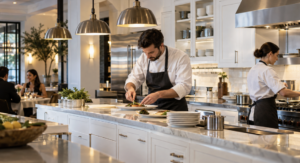
Dallas has become one of the most competitive restaurant markets in Texas. New concepts open, established operators expand, neighborhoods change, consumer tastes shift, and customers have more choices than ever. For restaurant owners, serving excellent food is only one part of building a business that lasts. Strong management systems behind the scenes can be just as important as what arrives at the table.
That is one reason restaurant operators can learn a surprising amount from healthcare management. Restaurants and healthcare organizations may appear to have little in common, but both depend on coordinated teams, consistent procedures, accurate communication, customer satisfaction, safety standards, scheduling, inventory management, and the ability to respond quickly when something goes wrong.
Anyone following Eater Dallas Restaurant News can see how rapidly the local dining landscape changes. Openings, closings, new concepts, chef changes, expansions, and shifting customer preferences create an environment where restaurant owners cannot afford to manage entirely by instinct.
Healthcare management offers several practical strategies that can translate remarkably well to restaurants, hospitality companies, retailers, construction firms, professional services, and almost any organization that relies on people working together under pressure.
Standardized Procedures Create Consistent Results 🍽️
One of the strongest lessons from healthcare management is the importance of repeatable procedures. Hospitals and medical organizations cannot depend on every employee inventing a different way to complete an important task. Processes are documented so team members understand what should happen, who is responsible, and what needs to be checked before the process is complete.
Restaurants benefit from exactly the same discipline.
Recipes are an obvious example, but standardization should extend far beyond the kitchen. Opening procedures, closing procedures, table preparation, reservation handling, inventory counts, cleaning schedules, food receiving, customer complaints, employee onboarding, cash handling, and shift changes can all benefit from written processes.
This does not mean eliminating personality or turning hospitality into a robotic experience. It means removing unnecessary variation from the parts of the business where consistency matters.
A customer who visits a Dallas restaurant on Tuesday should receive approximately the same level of service as someone visiting Saturday night. A manager should not have to reinvent the closing checklist because a different supervisor happens to be working.
Local restaurant reporting from the Dallas Morning News restaurant section regularly reflects how competitive the North Texas dining environment has become. In a market filled with choices, consistency becomes part of the brand.
Treat Shift Changes Like Critical Handoffs
Healthcare organizations pay close attention to handoffs because important information can disappear when responsibility moves from one person or team to another. Restaurants experience the same problem every day.
A lunch manager leaves without mentioning an unhappy customer who plans to return for dinner. A server forgets to tell the next shift about a large reservation. The kitchen runs low on a key ingredient, but nobody informs the evening manager. Maintenance notices a refrigeration problem, yet the information never reaches the owner.
These small communication failures can become expensive problems.
A structured handoff can be remarkably simple. Managers can spend five minutes reviewing staffing issues, reservations, inventory shortages, equipment problems, customer concerns, special events, and anything unusual that happened during the previous shift.
The important part is making the handoff part of the operating system rather than something employees remember only when there is a problem.
The constant stream of openings, menu changes, events, and dining developments covered by CultureMap Dallas Restaurants + Bars demonstrates how dynamic the local hospitality market can be. Restaurants operating in that environment need internal communication that moves just as quickly.
Measure Leading Indicators, Not Just Monthly Sales 📊
Restaurant owners naturally watch revenue, food cost, labor cost, and profit. Those numbers matter, but healthcare management often looks deeper by monitoring indicators that can reveal trouble before the final financial results arrive.
Restaurants can do the same.
Consider tracking ticket times, reservation cancellations, online review trends, employee turnover, repeat customer rates, overtime hours, food waste, comps, returned dishes, table-turn times, inventory discrepancies, and customer complaints.
None of those numbers alone tells the entire story. Together, they can reveal patterns.
A restaurant may still be profitable while ticket times gradually increase. Another location may show excellent sales but experience rapidly increasing employee turnover. Food costs may appear acceptable even while waste rises because higher sales temporarily hide the problem.
Management becomes more powerful when operators identify changes before they become emergencies.
This is also where outside management expertise can provide value. Disciplines such as Dallas Healthcare Management Consulting demonstrate the broader business principle of examining operations systematically rather than focusing exclusively on the final financial result.
Restaurant owners do not need dozens of dashboards. A handful of meaningful measurements reviewed consistently can provide a clearer picture of operational health.
Build Systems That Prevent Problems Instead of Reacting to Them
Healthcare management places enormous emphasis on prevention. Preventing an error is usually less disruptive and less expensive than dealing with the consequences afterward.
Restaurant owners can apply the same principle throughout their operations.
Equipment maintenance is a simple example. Waiting until a refrigerator fails during Saturday dinner service creates an emergency. Scheduling inspections and maintenance reduces that risk.
The same approach applies to employee training. Training someone thoroughly before placing that person into a busy service environment costs time upfront, but it can prevent mistakes, customer complaints, and unnecessary turnover.
Preventive management can also include checking vendor performance, reviewing employee schedules before overtime becomes excessive, watching food inventory before shortages occur, and addressing minor maintenance issues before they become major repairs.
Restaurant coverage from D Magazine’s SideDish illustrates just how active the Dallas dining market remains. Restaurants are continually competing for customer attention, experienced employees, desirable locations, and positive reputations. Operators who constantly manage emergencies have less time available for growth.
Cross-Training Makes a Restaurant More Resilient
Healthcare organizations cannot function effectively when too much operational knowledge belongs to a single individual. Restaurants face the same risk.
If only one employee understands the reservation system, scheduling process, inventory order, payroll procedure, catering workflow, or closing routine, that employee becomes a potential point of failure.
Cross-training does not require every employee to perform every job. It means ensuring that critical responsibilities have backup coverage.
An assistant manager should understand essential administrative procedures. More than one kitchen employee should know ordering routines. Several front-of-house employees should understand the reservation platform. Important vendor information should be accessible to management rather than stored in one person’s phone.
Cross-training also creates advancement opportunities. Employees who understand more of the operation become stronger candidates for supervisory and management roles.
That internal pipeline can become especially valuable in a competitive restaurant market. The Dallas Observer restaurant section provides an ongoing look at the volume and diversity of restaurants competing throughout Dallas and North Texas. Businesses capable of developing talent internally can reduce some of the disruption associated with continual hiring.
Make Customer Experience Part of Operations, Not Just Marketing 🌟
Healthcare organizations increasingly recognize that the experience surrounding a service influences how people perceive the organization itself. Restaurants have always understood hospitality, but customer experience should be managed as an operational process rather than simply a personality trait.
The guest experience begins before someone walks through the door.
It includes how easily customers find information online, whether reservation details are accurate, how the restaurant handles phone calls, parking, the host interaction, cleanliness, wait times, menu presentation, server knowledge, food delivery, payment, and how problems are resolved.
A restaurant can serve outstanding food and still lose customers because several smaller frustrations occur during the visit.
Management teams should periodically experience their restaurant from the customer’s perspective. Review the reservation process. Call the restaurant. Examine the website on a phone. Walk through the entrance. Look at the restrooms. Review recent online comments for recurring themes.
The goal is not to chase every individual complaint. It is to find patterns.
Dallas attracts locals, business travelers, convention visitors, sports fans, and tourists, creating a broad customer base for restaurants across the city. Resources such as Visit Dallas Food & Drink illustrate the variety of dining experiences competing for those customers.
Restaurants that make the entire customer journey easier can differentiate themselves without changing a single recipe.
Create a Culture Where Employees Report Problems Early
One of the most valuable management ideas from healthcare is encouraging employees to identify problems before those problems escalate.
Restaurant workers frequently notice operational issues before management does.
A dishwasher sees equipment leaking. A bartender notices a product running out faster than usual. Servers hear the same complaint repeatedly. Line cooks recognize that a preparation process is slowing service. Hosts notice customers consistently becoming frustrated about a reservation policy.
Employees need a clear way to communicate those observations.
Managers can unintentionally discourage reporting by reacting negatively every time someone brings up a problem. Employees quickly learn that remaining silent is easier.
Strong organizations create the opposite culture. Problems are surfaced early, discussed, and corrected.
The goal is not blame. The goal is improving the system.
That approach can also uncover ideas. Employees working directly with customers often recognize opportunities that owners and executives cannot see from an office.
Plan Capacity Before Demand Creates Chaos
Healthcare organizations have to think constantly about capacity. Restaurants should do the same.
Capacity is more than the number of seats in the dining room.
Kitchen capacity, staffing capacity, parking, reservation volume, bar seating, food preparation, takeout orders, delivery orders, catering, and private events can all affect whether the restaurant functions smoothly.
A dining room may hold 150 people, but that does not necessarily mean the kitchen can comfortably serve 150 people arriving within the same thirty-minute window.
Understanding true operational capacity allows managers to control reservations, staffing, preparation, and promotions more intelligently.
This becomes particularly important when a restaurant receives unexpected publicity, hosts an event, participates in a festival, or experiences a sudden increase in online attention.
Growth without operational capacity can actually damage a restaurant. Long ticket times and overwhelmed employees can turn increased demand into negative customer experiences.
Document Institutional Knowledge Before It Disappears
Every restaurant develops knowledge that exists primarily inside people’s heads.
A longtime manager knows which vendor can make an emergency delivery. A chef understands exactly how a piece of equipment behaves. A server knows the preferences of dozens of regular customers. An owner remembers why certain policies were created.
When those people leave, much of that knowledge can disappear.
Healthcare management frequently relies on documentation because important information cannot depend entirely on individual memory. Restaurants can benefit from the same practice.
Vendor lists, passwords, equipment information, training procedures, recipes, emergency contacts, maintenance schedules, opening routines, closing routines, and management processes should be documented and kept current.
Dallas has a long restaurant history, and Wikipedia’s list of restaurants in Dallas includes businesses and concepts that illustrate how varied the city’s dining legacy has been. Restaurants that survive for decades generally do more than create a popular menu. They build an organization capable of continuing through employee changes, economic cycles, changing neighborhoods, and evolving customer preferences.
Separate Urgent Problems From Important Problems
Restaurant management can feel like a continuous stream of emergencies. Someone called out. A delivery is late. A customer needs a manager. A piece of equipment stopped working. A reservation needs to be changed.
Those problems require attention, but they can consume the entire workday.
Healthcare executives also operate in environments filled with immediate demands. Effective management requires separating urgent issues from important long-term work.
For a restaurant owner, important work might include improving employee retention, negotiating supplier contracts, redesigning training, analyzing menu profitability, developing managers, improving local marketing, replacing aging equipment, or planning another location.
If leadership spends every day working inside the immediate operation, those strategic projects remain unfinished.
One practical approach is scheduling dedicated management time each week for work that improves the business rather than simply keeps today’s shift moving.
Even a few protected hours can change how a restaurant operates over time.
Use Continuous Improvement Instead of Constant Reinvention
Successful management does not require completely rebuilding the business every few months.
Healthcare organizations often use continuous improvement models in which small adjustments are measured, evaluated, and refined. Restaurants can follow a similar approach.
A manager might change the reservation confirmation process and measure no-shows. The kitchen might reorganize a station and compare ticket times. The owner might modify employee onboarding and track ninety-day retention.
Small changes are easier to test and easier for employees to adopt.
They also create a culture in which improvement becomes normal.
Restaurant owners sometimes wait for a major problem before changing a system. Continuous improvement reverses that mindset. The organization is always looking for small ways to become safer, faster, more consistent, and more profitable.
Conclusion
Dallas restaurant owners operate in one of the most energetic and competitive dining environments in the country. Great food remains essential, but successful restaurants also depend on disciplined management behind the scenes.
Healthcare management provides a useful framework because it emphasizes many of the same challenges restaurant leaders face every day: coordinating people, maintaining standards, communicating accurately, planning capacity, preventing problems, measuring performance, protecting customer experience, and improving systems over time.
The most valuable lesson is simple. Strong businesses do not depend entirely on individual effort or heroic managers solving emergencies every day. They create systems that allow people to perform consistently.
For Dallas restaurant owners, adopting that mindset can improve service, strengthen teams, reduce operational surprises, protect margins, and create a business that is better prepared to grow. Whether the company operates one neighborhood restaurant or dozens of locations, stronger management systems can become one of its most important competitive advantages.