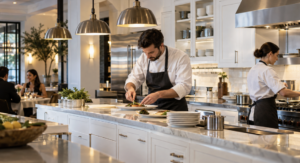
Restaurant design has become an increasingly important part of the dining experience. Guests notice much more than the food placed in front of them. They notice lighting, color, furniture, organization, cleanliness, open kitchens, service counters, bars, and the overall atmosphere created by the space. As restaurant owners continue looking for ways to create distinctive interiors while maintaining practical work areas, white cabinetry has become an increasingly attractive design choice.
White kitchen cabinets have long been associated with residential kitchens, but their clean appearance and versatility also make them well suited to many restaurant environments. From upscale cafés and bakeries to casual dining concepts, hotel restaurants, coffee shops, and restaurants with visible kitchens, white cabinetry can create a polished backdrop that works with numerous styles.
The broader restaurant industry continues to place greater emphasis on the experience surrounding a meal. The National Restaurant Association regularly covers economic, operational, culinary, and consumer developments shaping restaurants throughout the United States. As restaurants compete not only on food but also on atmosphere and guest experience, interior design decisions have become part of how operators communicate their brands.
Restaurant Design Is Becoming Part of the Brand Experience
Restaurant interiors are no longer viewed simply as spaces containing tables, chairs, kitchens, and service stations. The physical environment increasingly helps establish the personality of the business. Every surface can contribute to the impression guests form when they enter.
According to coverage of evolving restaurant concepts by FSR Magazine, restaurant layouts and design approaches continue to change as operators look for new ways to create memorable full-service dining experiences. Restaurants are often expected to deliver a recognizable atmosphere that complements their menus and overall identity.
Cabinetry plays a larger role in that environment than it might initially appear. Cabinets can be incorporated into open kitchens, beverage stations, host areas, bakery counters, coffee bars, storage walls, server stations, display areas, private dining spaces, and other visible portions of a restaurant.
White cabinets provide a relatively neutral foundation, allowing designers to introduce personality through countertops, flooring, wall treatments, lighting, hardware, tile, artwork, and furnishings without forcing every element to compete visually.
White Cabinets Can Create a Cleaner Visual Environment
Cleanliness has always been essential in foodservice, but diners also respond to spaces that appear organized and carefully maintained. White surfaces can contribute to that impression because they reflect light and create a bright, open appearance.
The connection between restaurants and cleanliness extends far beyond appearance. Food preparation environments operate under extensive sanitation and food safety standards. Organizations such as the U.S. Food and Drug Administration publish food safety information and guidance affecting restaurants and other foodservice establishments.
Cabinet color alone does not make a restaurant cleaner, but the appearance of white cabinetry can support a visual environment associated with order and attention to detail. Marks, spills, and residue may also be easier for employees to notice on lighter surfaces, which can encourage prompt cleaning in appropriate applications.
For restaurants featuring partially or completely open kitchens, maintaining an orderly appearance can be especially important because guests can see areas that historically remained hidden behind kitchen doors.
Open Kitchens Have Changed What Guests See
The expansion of open and partially visible kitchens has made back-of-house design more important. Equipment, shelving, cabinets, prep areas, and work surfaces can become part of the restaurant’s visual presentation rather than remaining strictly functional elements.
Modern Restaurant Management has extensively covered restaurant design trends and the increasing importance of balancing atmosphere, operational efficiency, flexibility, and brand storytelling. That balance becomes especially significant when working portions of the restaurant are visible to diners.
White cabinetry can work particularly well in open-kitchen environments because it creates a simple background around stainless steel appliances, stone countertops, tile, wood accents, or dramatic lighting.
Rather than competing with the activity occurring inside the kitchen, white cabinetry can help make the overall area appear more unified.
Restaurants considering Kitchen Cabinets White can also use the cabinetry as the starting point for a larger design palette rather than treating cabinets as an isolated decision.
White Works With Multiple Restaurant Styles
One reason white cabinetry remains popular is its ability to adapt to very different aesthetics.
A coastal seafood restaurant might combine white cabinets with pale woods and blue accents. A modern café may pair them with black hardware and polished concrete. A bakery could use white cabinetry alongside marble-inspired counters and warm lighting. An upscale dining concept might combine white cabinets with brass finishes, dark flooring, and dramatic pendant fixtures.
Even restaurants with colorful branding can use white cabinetry successfully because the cabinets provide visual breathing room around stronger colors.
The variety found throughout the restaurant industry is enormous. As the general overview of a restaurant on Wikipedia illustrates, restaurants range from fast-food and cafeteria concepts to mid-priced establishments and luxury dining destinations. There is no single restaurant design formula, which makes adaptable materials and colors particularly useful.
White cabinetry can move between many of those environments without automatically defining the restaurant as traditional, contemporary, casual, or formal.
Cabinetry Can Help Smaller Restaurant Spaces Feel More Open
Restaurant real estate can be expensive, and many operators need to accomplish a great deal within limited square footage. Dark cabinetry can be attractive, but large areas of dark color sometimes make compact spaces feel visually heavier.
White cabinets reflect more available light and can help cabinetry blend into surrounding walls, especially when similar shades are used throughout the space. This can make storage-heavy areas feel less imposing.
That quality can be valuable in small restaurants, cafés, food halls, bakeries, and urban locations where cabinets may occupy a significant amount of visible wall space.
The restaurant industry’s continuing evolution is regularly documented by publications such as QSR Magazine, which covers restaurant operations, technology, growth, development, and changing consumer expectations. Efficient use of restaurant space remains important regardless of whether an establishment operates from a compact storefront or a large freestanding building.
Good restaurant design needs to balance aesthetics with the realities of serving customers efficiently. Cabinetry that provides substantial storage without visually overwhelming the room can support both goals.
White Creates a Strong Background for Food and Displays
Restaurants sell food first, and interior design should support rather than overpower the product.
White cabinetry provides a subdued background that allows colorful foods, pastries, beverages, merchandise, menu displays, plants, artwork, and branded materials to stand out.
This is particularly useful in restaurants where customers interact directly with display areas. Bakeries, cafés, dessert shops, wine bars, coffee shops, and counter-service restaurants may use cabinetry around glass display cases, beverage preparation stations, retail shelves, or pickup counters.
Food remains the visual focus.
Publications such as Food & Wine regularly document changing restaurant and dining trends, demonstrating how strongly food, presentation, atmosphere, and cultural influences intersect in the modern dining experience. A thoughtfully designed restaurant allows all of those elements to work together rather than compete for attention.
White Cabinets Provide Flexibility When Restaurant Branding Changes
Restaurants periodically update their branding, menus, signage, furniture, lighting, and décor. A highly specific cabinet finish may eventually conflict with a new visual direction, while white tends to remain compatible with a broad range of colors and styles.
That flexibility can be valuable for restaurant owners trying to make design decisions with a longer lifespan.
A restaurant could initially pair white cabinetry with natural wood and soft colors, then later introduce black fixtures, stronger artwork, or different countertops without necessarily replacing the cabinets.
This does not mean every restaurant should select white cabinetry. Some concepts depend on dark woods, bold colors, industrial finishes, or highly decorative millwork. The strongest restaurant design is the one that supports the individual concept.
White simply provides operators with a particularly adaptable foundation.
Durability Still Matters More Than Color
Restaurant cabinetry must do more than look attractive. Restaurants are demanding environments where surfaces can be exposed to frequent cleaning, moisture, grease, heat, repeated opening and closing, and constant employee use.
Cabinet construction, materials, hardware, finish quality, installation, and intended placement therefore deserve careful consideration.
Commercial operators also have to account for applicable building, fire, accessibility, sanitation, and local code requirements. The U.S. Small Business Administration provides resources for businesses addressing planning, operations, regulations, and other considerations involved in running a company.
Restaurant owners planning renovations should work with appropriate contractors, designers, cabinet professionals, and other qualified specialists to make certain selected materials fit the intended commercial application.
The success of white cabinetry in a restaurant ultimately depends on choosing products that can handle the demands of the environment where they will be installed.
Restaurants Are Paying More Attention to Long-Term Design Value
Restaurant operators are under constant pressure to manage costs while creating spaces customers want to visit. Interior improvements therefore need to provide more than short-term visual appeal.
A cabinet style that remains useful through changes in décor can potentially offer greater long-term design flexibility. White cabinetry fits that objective because surrounding elements can often be changed without requiring the entire cabinet system to be replaced.
Countertops can change. Hardware can change. Wall colors can change. Lighting can change. Furniture can change. Signage and branding can change.
The cabinetry can continue serving as a neutral architectural component.
This flexibility is particularly relevant as restaurant operators navigate changing consumer expectations and economic pressures. The restaurant industry continues to adapt rapidly, making versatile spaces increasingly valuable.
White Cabinetry Can Support Both Function and Presentation
The most successful restaurant designs do not separate appearance from operation. Attractive spaces must still work efficiently for employees and guests.
Cabinets need to provide usable storage. Service stations need to support staff movement. Counters need appropriate work surfaces. Kitchen areas must remain practical. Guest-facing portions of the restaurant need to reinforce the brand.
White cabinetry can help connect those objectives because it functions as both storage and a visual design element.
In an open kitchen, cabinetry becomes part of the dining room view. At a coffee bar, it becomes part of the customer experience. At a host station, it contributes to a guest’s first impression. In a bakery, it can frame colorful displays. In a private dining area, it can provide concealed storage while maintaining an elegant appearance.
The same cabinet color can perform very different roles depending on how the restaurant uses it.
Conclusion
White kitchen cabinets are gaining attention in restaurant design because they offer something operators increasingly value: versatility.
They can create a bright, organized appearance, complement open kitchens, work with a wide range of restaurant concepts, make compact spaces feel less visually crowded, and provide a neutral background for food, branding, and décor.
Their appeal also reflects a broader change in the restaurant industry. Dining spaces are becoming increasingly intentional. Customers experience the restaurant through its food, service, atmosphere, presentation, and physical environment. Every design element contributes to that experience.
White cabinetry will not be the right choice for every restaurant, nor should every dining space follow the same aesthetic. Restaurants succeed when their interiors reinforce their individual concepts while supporting efficient daily operations.
For establishments seeking cabinetry that can adapt to changing décor while maintaining a clean and polished appearance, however, white remains one of the most flexible choices available. As restaurant design continues to blend hospitality, branding, functionality, and visual appeal, white kitchen cabinets are likely to remain an important option for owners and designers creating the next generation of dining spaces.