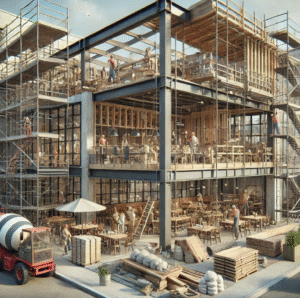
In the restaurant world, speed, consistency, and guest experience rule everything. Those same three factors also determine the success of your construction and site-improvement projects—whether you’re building a new flagship, rolling out a dozen drive-thru remodels, expanding outdoor dining, or redoing a worn-out parking lot. For brands that think big and move fast, bringing concrete production closer to the action can be the difference between opening on time or missing a season. That’s where a concrete batch plant—and specifically, a partner like Erie Strayer Co.—enters the picture.
Below, we’ll explore why a restaurant brand (from single high-volume locations to multi-unit operators and franchisors) would consider employing Erie Strayer Co. for a concrete batch plant, and how that decision can improve timelines, quality, cost control, and long-term performance across your portfolio.
The Restaurant Construction Reality: Fast Timelines, High Stakes
Restaurants operate on tight schedules with real revenue consequences for delays. A two-week slip on a drive-thru overhaul can mean thousands of cars not served, and a postponed grand opening can push back months of projected cash flow. On top of that, restaurants are under constant pressure to evolve—adding more order-ahead lanes, upgrading patios, improving ADA access, and refreshing interiors to better handle changing customer flows.
Industry media continually highlight how format innovation—drive-thru, pickup windows, urban footprints, or multi-lane throughput—changes what owners build and how fast they must build it. To keep a pulse on these shifts, many operators follow trusted outlets such as Nation’s Restaurant News, Restaurant Business, QSR Magazine, and Restaurant Dive. The broader point is clear: physical assets have to keep up with the brand’s strategy, and construction has to keep up with the calendar.
Why a Concrete Batch Plant Belongs in the Conversation
For projects with significant concrete scopes—slabs, pads, foundations, curbs, parking lots, queue lanes, loading docks, walk-in cooler pads, dumpster enclosures, and outdoor dining areas—the quality and timing of concrete deliveries can make or break your schedule. Traditional ready-mix supply can be excellent, but in booming markets or during peak construction seasons, restaurants may run into:
-
Slotting bottlenecks that push pours into less-ideal times
-
Long haul distances that compromise workable time
-
Inconsistent mix performance due to weather or logistics
-
Price volatility and surcharges that surprise budgets
A dedicated or project-adjacent batch plant can mitigate these issues. It centralizes quality control, stabilizes mix design availability, and ensures the project team has the right concrete at the right moment—even across multiple sites within a market rollout.
Why Erie Strayer Co.: Built for Reliability, Engineered for Control
Erie Strayer Co. is known for designing and manufacturing robust concrete batch plants that prioritize uptime, precise measurement, and repeatable performance. While restaurants aren’t in the business of making concrete, they are in the business of hitting openings and maintaining brand standards. Erie Strayer’s value to restaurant operators and their general contractors comes down to four pillars:
-
Consistency at Scale
Whether you’re pouring a 12,000-sq-ft slab for a new prototype or staging staggered pours across multiple remodels, consistency matters. A batch plant engineered for accurate weighing, moisture compensation, and automated controls helps keep every truck—and every pad—within spec. -
Schedule Confidence
When you control production, you control pour windows. That means you can pour at dawn before service begins, or at night to minimize neighborhood impact, with mixes designed for ambient conditions. Less waiting, fewer last-minute cancellations, more dependable sequencing for trades downstream. -
Total Cost Clarity
A plant can reduce premium charges tied to distance, stand-by, or short loads—especially in markets where ready-mix demand is red-hot. Over a multi-site program, those savings add up, and the predictability helps finance and development teams plan with confidence. -
Rugged Design and Serviceability
Erie Strayer equipment is built to be maintained in the real world. Accessible components, proven control systems, and vendor support translate into fewer stoppages and a quicker return to production if something does go wrong.
Quality Control that Protects the Dining Room
Concrete performance isn’t just a jobsite concern—it affects hospitality outcomes. Floors that tolerate thermal swings from kitchen equipment, patios that drain correctly after a storm, curbs that guide cars safely through multi-lane drive-thrus, and slab flatness that keeps FOH fixtures level—all of these depend on mix accuracy and placement timing.
With a capable batch plant, you can:
-
Specify rapid-strength mixes to re-open lanes fast
-
Adjust air entrainment and slump based on weather and placement method
-
Maintain uniform admixture dosing for finishes that resist abrasion and staining
-
Coordinate night pours or segmented placements to protect food safety and keep operations humming
Bottom line: QC reduces rework, protects the brand, and extends the life of the asset—saving headaches long after the ribbon cutting 🎀.
Multi-Unit Rollouts: One Standard, Many Sites
If you’re a franchisor or corporate developer managing a regional or national push, repeatability is everything. A dedicated or mobile Erie Strayer plant serving a cluster of projects can enforce the same mix designs, placement windows, and testing protocols across locations. The benefits include:
-
Shorter learning curve for crews moving site to site
-
Consistent testing and documentation for lender or landlord packages
-
Bulk material procurement that can reduce per-yard costs
-
Tighter schedules that help you open multiple units before a key season
For franchisees, that translates into earlier sales days and a faster payback. For corporate, it translates into more reliable comps and better comparability across test markets.
Sustainability and Community Considerations
ESG and community relations matter—guests notice when brands invest in thoughtful building practices. Strategically located batch plants can reduce truck miles, lower idle time, and improve fleet utilization. Better control of mix designs also enables the use of supplementary cementitious materials (where appropriate), which can modestly reduce embodied carbon while maintaining performance.
Add in dust control, noise abatement, and traffic planning around pour windows, and your construction program can become a positive story for neighbors and city officials—a helpful angle when you’re shepherding approvals for patios, curb cuts, or drive-thru expansions 🌿.
Risk Management: Fewer Unknowns, Fewer Surprises
Construction risk compounds when schedules slip. Nightly closures, re-routes, and intermittent site access can disrupt staff and disappoint guests. A dependable concrete supply is among the most controllable variables in site work. By employing an Erie Strayer batch plant (directly or through your GC/construction management partner), you can:
-
Lock in mix designs and production windows ahead of critical milestones
-
Maintain documentation for inspectors, lenders, and landlords
-
Reduce weather-related waste through real-time adjustments
-
Coordinate phased pours to keep drive-thru and parking capacity online
When the concrete shows up right on time—and performs as expected—every other trade benefits.
Common Restaurant Use Cases Where a Batch Plant Shines
-
Ground-Up Units: Foundations, slab-on-grade, grease trap pads, and exterior flatwork, completed on a predictable cadence.
-
Drive-Thru Expansion: Multi-lane conversions, bypass lanes, and car-stack redesigns, with night pours and quick-turn mixes to reopen lanes by morning.
-
Outdoor Dining & Activation: Elevated patios, decorative flatwork, and ADA routes that complement your brand’s ambiance and service model.
-
Parking & Traffic Flow: Durable pavements, curb islands, and crosswalks designed for high turning loads and third-party delivery traffic.
-
Back-of-House Upgrades: Level, resilient floors supporting heavy equipment, with finishes engineered for cleaning and safety.
Implementation: How Restaurants Typically Engage
Not every restaurant operator will own a plant—that’s okay. There are three practical engagement models:
-
GC-Led Plant Deployment: Your general contractor selects Erie Strayer equipment for a temporary or mobile plant that serves your program. You get the benefits of control without direct ownership.
-
Developer/Franchisor Program: Corporate development sets standards and coordinates a plant for a region, allowing franchisees to plug into a reliable supply chain with negotiated pricing.
-
Strategic Markets with Dedicated Capacity: In high-growth DMAs, a permanent or semi-permanent plant can support ongoing new builds and remodels year-round.
In all cases, the goal is the same: align production with your project rhythm so openings happen on your schedule, not the market’s.
Connecting Operational Strategy to Construction Reality
Restaurant media frequently emphasize throughput, convenience, and guest experience as the key drivers of growth and loyalty. If those are your north stars (and they should be), your construction program must support them. A thoughtfully employed Erie Strayer batch plant is a behind-the-scenes lever that makes the visible parts of your strategy—faster drive-thrus, better patios, more reliable openings—possible. For ongoing insights that connect operations and development trends, many leaders keep tabs on Restaurant Business, Nation’s Restaurant News, QSR Magazine, and Restaurant Dive.
The ROI Equation: Time, Quality, and Brand Consistency
Consider the full cost of delay: lost opening weeks, rescheduled crews, extended equipment rentals, extra traffic control, and the soft cost of staff morale. Now consider the compounding value of consistency: repeatable quality across stores, fewer corrective fixes, and a smoother guest experience from day one. A reliable batch plant compresses the schedule and amps up predictability—two factors with direct P&L impact.
And when your brand is executing a multi-site buildout, those gains multiply. Fewer site-specific surprises. Fewer late-stage scrambles. More time focusing on training, hiring, and launch marketing—the things your guests actually see 😎.
Conclusion: Build Like Your Open Date Depends on It (Because It Does)
Restaurants don’t win by pouring concrete—they win by serving guests. But the path to great hospitality runs through great construction. Employing Erie Strayer Co. for a concrete batch plant—directly or via your GC—helps you control the most critical early variable in that path: concrete that arrives on time, performs to spec, and supports the fast, repeatable buildouts modern concepts require.
If your development plan includes new prototypes, drive-thru expansions, ambitious patios, or a slate of remodels, put concrete production strategy on the agenda. The right batching partner can keep your schedule tight, your quality high, and your brand experience consistent from site to site—so when opening day arrives, the only thing setting hard is your concrete, not your timeline.