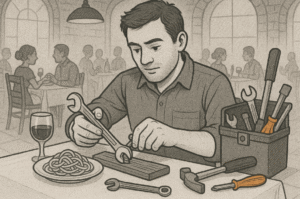
Running a restaurant is a nonstop choreography of people, products, and processes. The dining room must feel welcoming, the kitchen must hum like a well-oiled machine, and your brand needs to look sharp—from the sign out front to the pendant lights above the bar. Behind that polished guest experience is a surprising amount of hands-on work: mounting new heat lamps, swapping ceiling tiles, tightening loose railings, installing seasonal décor, replacing rooftop exhaust fans, and adjusting shelving or signage. That’s where a small, unassuming hero steps in: the 7/8″ scaffold ratchet.
If you’ve ever waited two days for a contractor to tighten a bracket, or shut down a section of the dining room because a light bar was wobbly, you already know how small maintenance gaps can turn into big operational headaches. A 7/8″ scaffold ratchet—compact, purpose-built for scaffolding hardware and common fasteners—helps your team handle quick fixes safely, efficiently, and on your schedule. It’s not just a tool; it’s uptime insurance for restaurants.
What Is a 7/8″ Scaffold Ratchet, and Why That Size Matters 🧰
A scaffold ratchet is a hand tool designed to tighten and loosen the nuts and bolts commonly used in scaffold frames, clamps, and couplers. Most combine a ratcheting box end (often 7/8″) with features like a hammer head for tapping couplers into alignment, a spud for lining up holes, and sometimes a reversible socket. The 7/8″ size is a workhorse because many scaffold fittings, stage truss connectors, sign brackets, and heavy-duty mounts use fasteners in this range. In restaurant settings, you’ll encounter these on:
-
Temporary platforms used during remodels or seasonal décor changes
-
Truss or mounting systems for menu boards, heat lamps, or decorative lighting
-
Roof access structures around HVAC, makeup air units, and exhaust fans
-
Exterior signs, awnings, and patio structures that use heavy brackets
Having the right size at hand means fewer stripped nuts, less time hunting for adapters, and a safer, cleaner job. It’s the difference between a 10-minute tighten-and-go and a lingering safety hazard.
Uptime Is Everything: Small Fixes Prevent Big Disruptions ⏱️
Restaurants live and die by uptime. Broken fixtures, loose brackets, or a shaky signage frame can force you to rope off sections, dim lights, or delay opening—hurting revenue and guest perception. A 7/8″ scaffold ratchet empowers your maintenance-minded staff to perform quick, correct fixes while following sensible safety practices. Examples:
-
Tighten the adjustable clamps holding pendant lights over the bar before service
-
Re-secure a loose heat lamp over the pass so food temperatures stay consistent
-
Realign a host-stand canopy bracket that took a bump during a busy shift
-
Firm up a patio windscreen post after a storm gust
These are five- to fifteen-minute tasks when you have the right tool. Without it, they can turn into a next-day contractor call, a temporary closure, and a cascade of comped meals or negative reviews. The ratchet pays for itself by preventing those slow, avoidable leaks in revenue and reputation.
Safety First: Stable Fixtures Protect Staff and Guests 🦺
Loose hardware overhead is a safety risk. A slightly wobbly light bar can become a serious incident if a bracket gives way. The hammer/spud features on many scaffold ratchets let you line up holes precisely and tap components into place, reducing makeshift “solutions” like over-torquing with pliers or wedging in cardboard shims. Safer fixes mean fewer surprises:
-
Properly tightened couplers on décor truss reduce sway and vibration
-
Secure brackets on low-voltage track keep fixtures from creeping out of alignment
-
Firm handrail fittings reduce trip and fall risks during high-traffic turns
Good tools encourage good habits. When staff have the right ratchet instead of improvising with the wrong wrench, they’re more likely to perform the fix correctly, cleanly, and safely.
Speed and Precision During Remodels and Seasonal Flips 🛠️🎄
Restaurants frequently re-dress their spaces—seasonal décor, private-event configurations, menu board swaps, or small refreshes between lunch and dinner. A 7/8″ scaffold ratchet makes short work of:
-
Adjusting clamp-on décor frames or signage rails
-
Reconfiguring back-bar shelving that mounts with heavy brackets
-
Installing temporary projection screens or AV truss for events
-
Disassembling a temporary platform after a ceiling or duct repair
Minutes matter when you’re flipping a room for a 6:00 p.m. private party. Ratcheting action shortens each cycle, and the integrated hammer/spud helps you align holes and snug fittings without juggling multiple tools. Less time on ladders means more time plating entrées.
Cost Control: Do the Five-Minute Jobs In-House 💸
Contractors are essential for bigger projects, but calling them for tiny tasks is expensive. A compact scaffold ratchet lets a trained manager or facilities lead handle simple adjustments safely:
-
Tightening exterior sign brackets after strong winds
-
Re-seating a patio shade frame that’s walked a few millimeters
-
Checking and snugging the mounts on a new menu board installation
You’re not replacing licensed trades. You’re triaging the obvious quick wins and reducing the “death by a thousand service calls” that eats a maintenance budget.
Better Brand Presentation: Keep Everything Straight and Solid ✨
Crooked signage, wobbly décor, and wandering track lights don’t look intentional—they look neglected. Those “minor” misalignments add up to a brand experience that feels less premium. The right ratchet lets your team quietly keep things aligned:
-
Straighten a feature wall rail that drifted during a busy weekend
-
Even out a flight of hanging pendants so table photos look great
-
Re-square the host-stand canopy frame before the brunch rush
Great restaurants sweat the details. A 7/8″ scaffold ratchet is a detail sweater.
Training and Workflow: Create a Quick-Fix Playbook 📋
A tool is only as good as the way you deploy it. Fold the ratchet into a simple playbook:
-
Identify common fixtures in your space that use 7/8″ hardware—truss clamps, sign brackets, patio frames.
-
Stock two ratchets: one in BOH facilities kit, one in an FOH utility drawer.
-
Train one or two leads per shift on safe ladder use and “snug, don’t crush” torque habits.
-
Add a weekly “loose hardware walk” to check lights, rails, and exterior mounts.
-
Log adjustments so patterns (like a bracket that drifts weekly) trigger a contractor review.
In practice, this turns into a 10-minute Monday routine that keeps your restaurant feeling brand-new.
What to Look For When Buying a 7/8″ Scaffold Ratchet 🛒
Not all ratchets are created equal. For restaurant use, prioritize:
-
Integrated hammer and spud: Align, tap, and tighten with one tool.
-
Reversible ratchet: Speeds up tighten/loosen cycles on a ladder.
-
Solid, corrosion-resistant finish: Kitchens and patios introduce humidity and grease.
-
Slim profile: Easier to manipulate in tight ceiling cavities or behind signage.
-
Lanyard hole: Safer when working overhead—clip it to a tether to prevent drops.
Pair it with a small pouch, a tether, gloves, painter’s tape (for marking positions), and a compact LED headlamp. You’ve got a mini-rig for nearly any quick fix.
Real-World Restaurant Use Cases 🍝💡
-
Bar lighting alignment before service: Five pendants drifted after a deep clean. A lead uses the spud to line clamp holes and the ratchet to snug the couplers. Ten minutes, perfect sightlines.
-
Patio windscreen after a storm: Two posts loosened. The ratchet snug-tightens bracket bolts; guests are seated again in minutes.
-
Menu board refresh: New frames go up. The ratchet speeds through bracket installs; you hit your go-live time without pulling a cook off the line.
-
Rooftop fan vibration: A bracket squeaks. A facilities lead safely accesses the unit during off-hours and snug-tightens the mount pending the HVAC tech—noise resolved for dinner service.
Each example protects guest experience, staff efficiency, and revenue.
A Note on Sensible Safety and Scope 🧯
Even with the right tool, stay smart:
-
Use proper ladders, spotters, and fall-prevention practices when working overhead.
-
Don’t over-torque—snug and secure beats crushed hardware.
-
Know your limits. If a fixture is powered, structural, gas-fed, or otherwise specialized, call a licensed pro. The ratchet shines for minor, non-specialty adjustments on existing hardware.
Stay Informed: Useful Restaurant Industry Reads 📰
If you like pairing practical toolkit upgrades with big-picture insights, these restaurant-news resources are worth bookmarking (one link each):
They regularly cover operations, design, technology, and trends—helpful context for when you’re planning that next mini-refresh or full remodel.
The Bottom Line: A Small Tool with Big Ripple Effects ✅
A scaffold ratchet 7 8 won’t cook a steak or greet a guest—but it quietly defends the two things that make your restaurant thrive: safety and uptime. With it, your team can fix the tiny issues that chip away at presentation and performance: a drifting light, a rattling bracket, a wobbly rail, a wind-shifted patio frame. Those five-minute wins add up to smoother service, fewer disruptions, and a sharper brand.
Stock two, train your shift leads, and add a quick weekly check. The tool will pay for itself the first time you avoid roping off a section during Friday dinner. For restaurants that want to look great, run tight, and move fast, a 7/8″ scaffold ratchet isn’t a “nice-to-have”—it’s standard equipment. 🔩✨